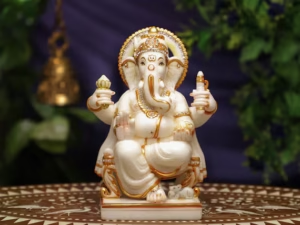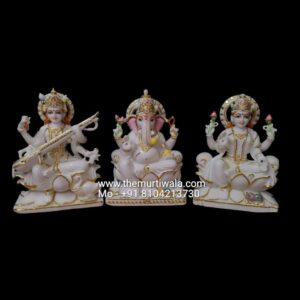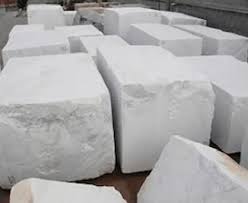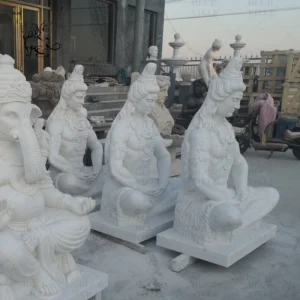
In today’s market, many idols sold as “marble” are actually mass-produced substitutes made from Cultured marble, dust, resin, or so-called Korean marble. While these idols may look attractive initially due to low prices, discerning HNI and NRI families who are looking high ticket artifacts consciously avoid them, especially for luxury home temples and private mandirs.
Here’s why.
Buyers avoid mass-produced cultured marble, marble dust, resin, and Korean marble idols sold online on leading shopping websites because these materials are synthetic, mould-made, and unsuitable for pran pratishtha. Unlike 100% handcrafted marble murtis carved from natural stone, mass-produced idols lack spiritual authenticity, durability, and long-term legacy value.
1. What Are Marble Dust / Resin Idols?
Marble dust or resin idols are not carved from natural stone. They are manufactured using an industrial process:
- Crushing leftover marble waste into fine powder
- Mixing it with synthetic resin or chemical binders
- Pouring the mixture into ready-made moulds
- Painting or polishing the surface to imitate marble
This method allows bulk production at low cost, but it severely compromises authenticity, durability, and spiritual value.
2. What Is “Korean Marble”? (The Biggest Misconception)
Despite the name, Korean marble is not marble at all.
It is:
- An engineered, resin-based artificial stone
- Primarily used for countertops and decorative wall panels
- Not suitable for religious idols or pran pratishtha
It is marketed with premium-sounding terminology, but it lacks both material purity and spiritual sanctity.
3. Why Mass-Produced Idols Are Avoided by HNI Families
❌ No Handcrafting, No Soul
Mass-produced idols are:
- Made entirely from moulds
- Produced in thousands of identical copies
- Created without artisan involvement
- Devoid of bhav (divine expression) in face or posture
For HNI families, a murti must be unique and consciously created, not mechanically replicated.
❌ Not Suitable for Pran Pratishtha
According to traditional belief and temple practices:
- Resin and dust idols are not shastra-compliant
- They lack the natural energy of stone
- Many priests discourage pran pratishtha on synthetic idols
HNIs who follow rituals seriously never compromise on this aspect.
❌ Short Lifespan & Structural Weakness
Mass-produced idols often:
- Develop cracks over time
- Yellow or fade
- React poorly to temperature changes
- Cannot be repaired like natural stone
In contrast, handcrafted marble murtis last 100+ years with minimal care.
4. Aesthetic Degradation Over Time
Although resin or dust idols may initially appear smooth:
- Paint begins to peel
- Artificial shine dulls
- Hairline cracks appear on the surface
- Edges chip easily
Luxury homes and private mandirs demand timeless elegance, not temporary appearance.
5. No Legacy or Heirloom Value
HNI families think in generations, not seasons.
Mass-produced idols:
- Cannot be meaningfully passed down
- Carry no artisan heritage
- Hold no emotional or spiritual lineage
A handcrafted marble murti becomes a family heirloom, often worshipped for decades.
6. Price-Driven Buyers vs Legacy-Driven Buyers
| Aspect | Mass-Produced Idols | Handcrafted Marble Murtis |
|---|---|---|
| Material | Marble dust / resin | 100% natural marble |
| Process | Machine mould | Hand carved |
| Uniqueness | Identical copies | One-of-a-kind |
| Spiritual Use | Decorative only | Suitable for pran pratishtha |
| Lifespan | 5–10 years | 100+ years |
| Buyer Profile | Price-driven | Legacy-driven (HNI/NRI) |
HNIs don’t ask “How cheap?”
They ask “How authentic?”
7. Why HNI & NRI Families Choose Handcrafted Marble Instead
Because handcrafted marble murtis offer:
- Spiritual authenticity
- Heritage craftsmanship
- Natural stone energy
- Customization for private mandirs
- Global export readiness
- Lifetime and generational value
For them, a murti is not décor—it is dharma.
Conclusion
Mass-produced marble dust, resin, and Korean marble idols may serve decorative purposes, but they do not meet the spiritual, material, or legacy standards expected by HNI and NRI families.
That is why discerning buyers across India, USA, UK, UAE, Singapore, and Europe continue to choose 100% handcrafted marble murtis carved by master artisans.
At TheMurtiWala.com, we strictly deal in authentic, temple-grade, handcrafted marble murtis—crafted in Jaipur and delivered worldwide with dignity, care, and reverence.
Why These Cultured/Korean Marble Idols Are Widely Available on E-Commerce Websites ?
Mass-produced Cultured marble, dust, resin, or so-called Korean marble idols are widely available on e-commerce websites because they are mould-made, lightweight, and easy to manufacture in large quantities. These characteristics make them suitable for bulk online retail and standardised listings.
Large online marketplaces prioritise scale, low pricing, fast dispatch, and uniformity, which aligns well with factory-produced idols. However, this retail model does not support the craftsmanship, material purity, or ritual requirements associated with handcrafted marble murtis.
In contrast, 100% handcrafted marble murtis carved from natural stone require skilled artisans, time-intensive workmanship, custom specifications, and careful handling. For this reason, such murtis are rarely sold through mass e-commerce platforms and are instead commissioned directly for home temples and private mandirs.